
Reducing tonal noise in wind turbines through broadband tile damping
Xi identified and mitigated problematic tonal noise in operational turbines using measurement, simulation, and optimised broadband damping tile installation to reduce noise radiation and improve site efficiency.
The Challenge
Tonal noise can significantly reduce the operational efficiency of wind farms, sometimes triggering curtailment notices and limiting generation capacity. In this project, persistent tones were traced to frequency matching between gear mesh harmonics and tower resonances.
The client required a proven, cost-effective solution that would reduce audibility without structural modification or extended downtime. Physical testing alone offered limited insight, accurately identifying the vibration/noise relationship was essential to designing an effective mitigation strategy.
Our Approach
Xi applied a combined measurement–modelling approach to diagnose and solve the issue.
First, our engineers performed noise surveys in accordance with ETSU-R-97 and IEC 61400-11 Ed.3, supported by a detailed vibration survey to confirm the link between tower motion and tonal radiation. The team then developed finite element (FE) models to simulate the tower’s dynamic behaviour and predict the expected noise reduction achievable through free-layer damping (FLD).
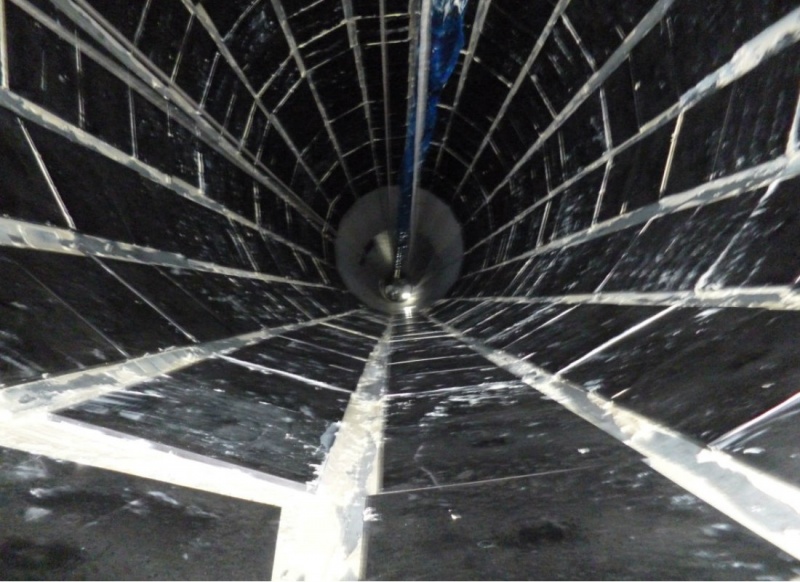
These models were iterated to optimise the placement and quantity of viscoelastic damping tiles on the tower wall, ensuring maximum impact with minimal material cost. Finally, Xi oversaw the engineering design and installation of the tiles, ensuring a precise fit and reliable long-term performance.
The Results
Why it matters
Tonal noise is one of the hardest acoustic challenges in wind energy, capable of triggering complaints, regulatory action, and costly curtailment. This project demonstrates how targeted damping, grounded in detailed measurement and modelling, can reduce noise at its source rather than masking the symptoms. By applying optimised FLD, operators can recover lost energy yield, extend component life, and address noise issues proactively across their turbine fleet.