
Designing a next generation personal vibration monitor
Xi helped Reactec move from tool mounted sensors to a body worn personal vibration monitor, using shaker table testing and algorithm analysis to balance battery life, measurement accuracy and user practicality.
The Challenge
Having created the market for personal vibration monitoring devices, Reactec saw demand for a lower cost, easier to deploy solution that measured exposure at the worker rather than on individual tools. Moving the sensor from the tool to the person introduced new technical challenges, including understanding how vibration passes through the hand and arm, and how best to sample and process signals without draining the battery. Reactec wanted independent analysis to inform design targets, optimise their algorithms and ensure that the new device would still provide reliable exposure data for managing hand arm vibration risk.
Our Approach
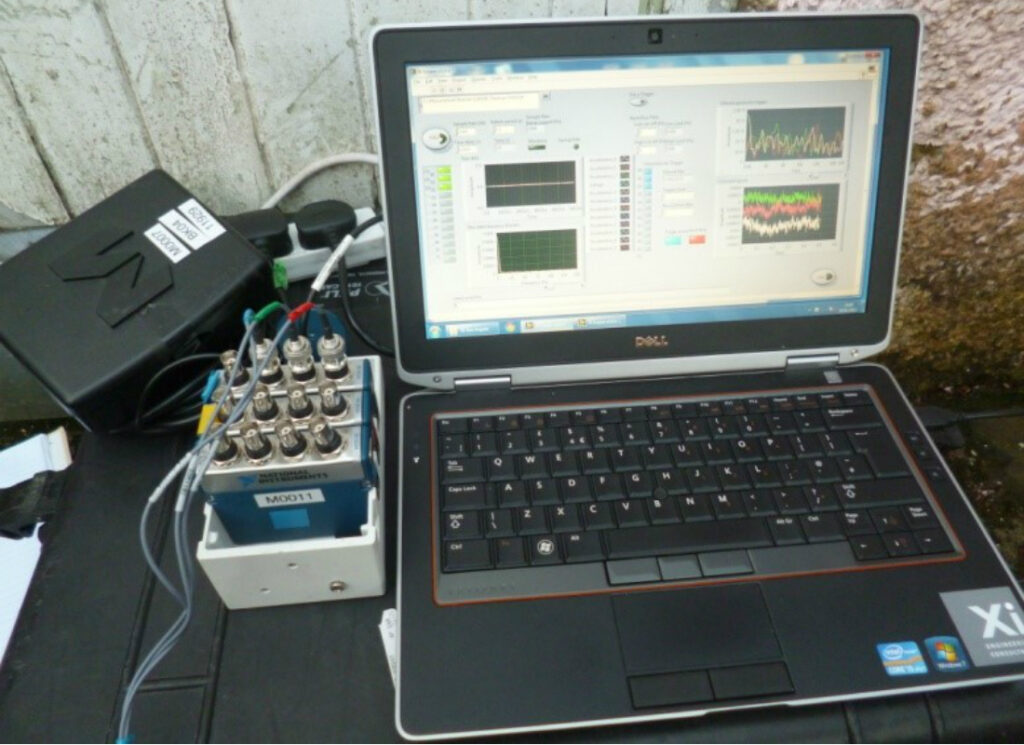
Xi used controlled shaker table experiments to characterise vibration transmissibility through the human hand and arm, across the frequency range relevant to hand arm vibration exposure. This information was then used to determine how the wearable device should sample and process data to give an accurate representation of exposure. Numerical analysis and sensitivity studies were carried out on the measurement and processing algorithms to understand how processor power, sampling strategies and filtering choices affected both accuracy and battery life. Xi also provided independent verification of the device performance against agreed criteria, giving Reactec external assurance on design decisions.
The Results
As a high growth investment backed innovative company Reactec have developed an excellent inhouse R & D capability. We compliment this by periodically engaging XI to help us perform mathematical analysis and to independently verify our developments, allowing us to optimise our product and drive down our time to market.”
jacqui mclaughlin
Reactec ceo
Why it matters
Wearable sensing is transforming how organisations monitor worker exposure to vibration and other risks. This project shows how Xi’s combination of experimental measurement, numerical analysis and algorithm optimisation can help product companies deliver practical, robust monitoring devices. The same skills can be applied to other personal sensors, including noise, motion and environmental exposure monitoring.