
Designing a tool vibration monitor for safer handheld power tool use
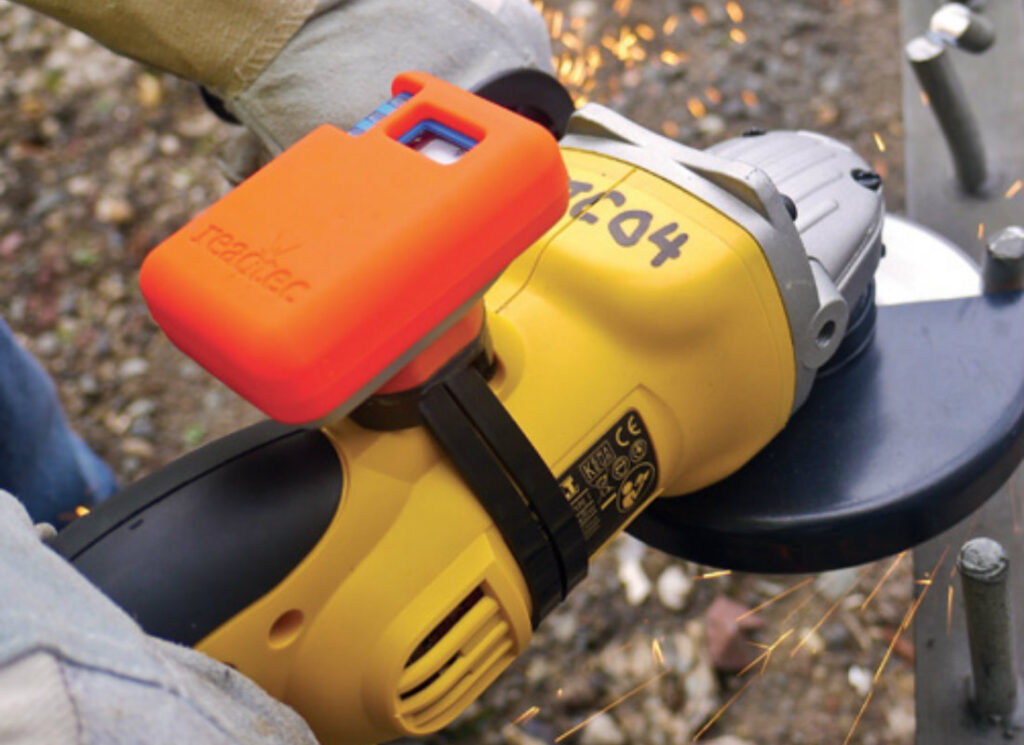
To help industry meet new legal limits on hand arm vibration exposure, Xi Engineering Consultants designed and developed the HAVmeter, a rugged personal vibration monitor that automates measurement and reporting for workers using power tools.
The Challenge
Hand arm vibration from handheld power tools is a major cause of ill health, leading to painful and disabling disorders of the blood vessels, nerves and joints. European Directive 2002/44/EC on vibration set exposure action and limit values for hand arm and whole body vibration over a standardised eight hour reference period, placing clear responsibilities on employers to understand and control the risks their workers face.
Industry turned to Reactec to provide a practical way of measuring and monitoring individual exposure to vibration from hand tools across a full working day. Any solution had to be easy for workers to use, robust enough for harsh construction environments and capable of turning complex vibration data into information that health and safety teams could act on. At the time, taking electronics into everyday site use in this way was largely uncharted territory.
Our Approach
Xi, whose founding team originated from Reactec’s research and development group, led the design and development of what became the HAVmeter personal vibration monitor. Working from first principles of hand arm vibration measurement and the requirements of the European Directive, the team created an electronic device that could attach to tools, capture representative vibration information and convert it into exposure data for individual workers over a shift.
Through iterative prototyping and testing, Xi refined the sensing hardware, processing algorithms and user interface so that workers could simply see when their exposure was approaching or exceeding safe levels. Particular attention was paid to making the device small, unobtrusive and intuitive, with clear visual indicators and minimal interaction required. At the same time, the system architecture had to support automated downloading, storage and reporting of exposure data to give organisations a comprehensive view of risk across their tool fleet and workforce.
A key part of the work was ensuring that the HAVmeter could survive day to day use in the tough environment of construction. Xi developed housings, mounting methods and internal layouts that protected the electronics from impact, dust and moisture, while still allowing reliable vibration coupling to the tool. Extensive field trials on live sites were used to prove durability and usability before the product was launched to market. In effect, this project brought a new class of electronic monitoring product into routine construction use for the first time.
The Results
Why it matters
Hand arm vibration remains a significant occupational health risk, especially in construction, utilities and heavy industry. Meeting regulatory requirements is not just about having policies in place, it depends on accurate, practical information on how much vibration individual workers are actually exposed to. Traditional spot measurements and paper based records rarely provide the level of detail needed to manage risk effectively.
This project shows how Xi’s combination of vibration expertise, electronic product development and real world testing can turn a regulatory challenge into a workable solution that fits into day to day operations. The same skills can be applied to other personal monitoring technologies, helping organisations track exposure to vibration, noise and other hazards in a way that is robust, user friendly and aligned with evolving health and safety expectations.