
Optimising passive cooling for high end audio electronics
Linn partnered with Xi to use Multiphysics simulation to refine the passive cooling fins in its flagship audio systems, improving thermal performance, reducing prototype build cost and supporting long term product reliability.
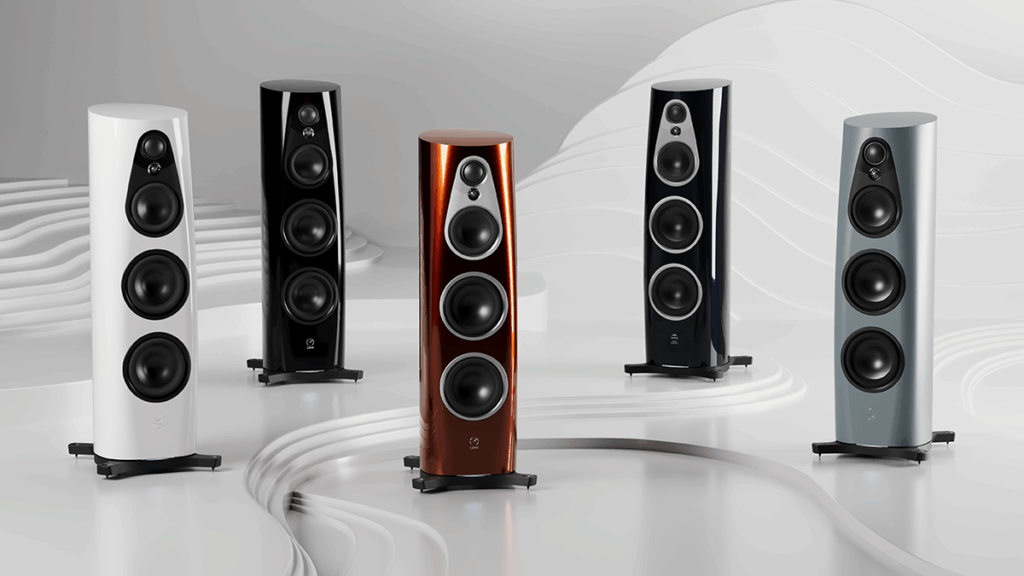
The Challenge
Linn is known for high performance audio systems that must deliver consistent, distortion free sound over long service lives. To preserve this performance without introducing fan noise, Linn relies on silent, passive cooling using aluminium fins and natural convection. The geometry of these fins is critical for maintaining safe operating temperatures. Traditional development, involving iterative machining and testing of physical prototypes, is slow and expensive. Linn wanted to accelerate cooling system optimisation, explore more design variants and gain deeper insight into thermal behaviour that cannot easily be measured inside an assembled product.
Our Approach
Xi built detailed Multiphysics models of the amplifier assemblies using COMSOL, capturing airflow, heat generation, conduction, convection and material properties. Different fin shapes and layouts were simulated to understand their impact on temperature distribution and airflow patterns through the chassis. Cloud computing resources were used to run multiple scenarios in parallel, allowing Linn’s engineering team to explore a wide design space without waiting for physical prototypes. The models were calibrated against available test data to increase confidence, then used to compare candidate designs in terms of maximum component temperature, thermal gradients and manufacturability. This allowed thermal performance and aesthetics to be optimised together, rather than in separate steps.
The Results
Simulation allows us to rapidly progress through the development process, giving us more time to work on the performance of our products. Both Linn and Xi Engineering Consultants have a similar engineering ethos: it’s about pursuing excellence.
Phil Budd, Mechanical & Acoustics Team Leader at Linn
Why it matters
Electronics manufacturers across sectors face similar trade offs between performance, form factor, noise and reliability. This collaboration demonstrates how Xi’s simulation expertise can be embedded into product development to speed up design, lower prototyping cost and de risk thermal performance. The same approach applies to amplifiers, power electronics, medical devices and industrial controllers where temperature management is critical.