
Medical pressure pump design for quieter wound therapy care
Xi Engineering Consultants reviewed and refined a prototype negative pressure wound therapy pump, combining physical testing and computer simulation to cut noise and vibration and guide the next generation design.
The Challenge
Negative Pressure Wound Therapy uses a vacuum dressing to promote healing of acute and chronic wounds and burns. To maintain a stable vacuum, a pump is required. Traditional systems are often relatively large and noisy, which can limit patient mobility and disturb sleep, especially when the pump must run continuously over 24 hours, including overnight.
A manufacturer was developing a new, smaller and more portable negative pressure pump. A working prototype existed, but early feedback suggested that noise and vibration could still affect patient comfort and acceptance. The design team needed independent assessment of the current prototype, a clear understanding of where noise and vibration originated and practical guidance on how to improve the next generation design without compromising performance or manufacturability.
Our Approach
Xi received the working prototype and set up a combined testing and simulation programme to understand its behaviour in detail. In the lab, our engineers instrumented the pump with microphones and accelerometers, measuring sound levels and vibration at different operating conditions that reflected realistic use. This allowed us to map how the drive mechanism, pump chamber and plastic housing each contributed to the overall acoustic and vibration signature.
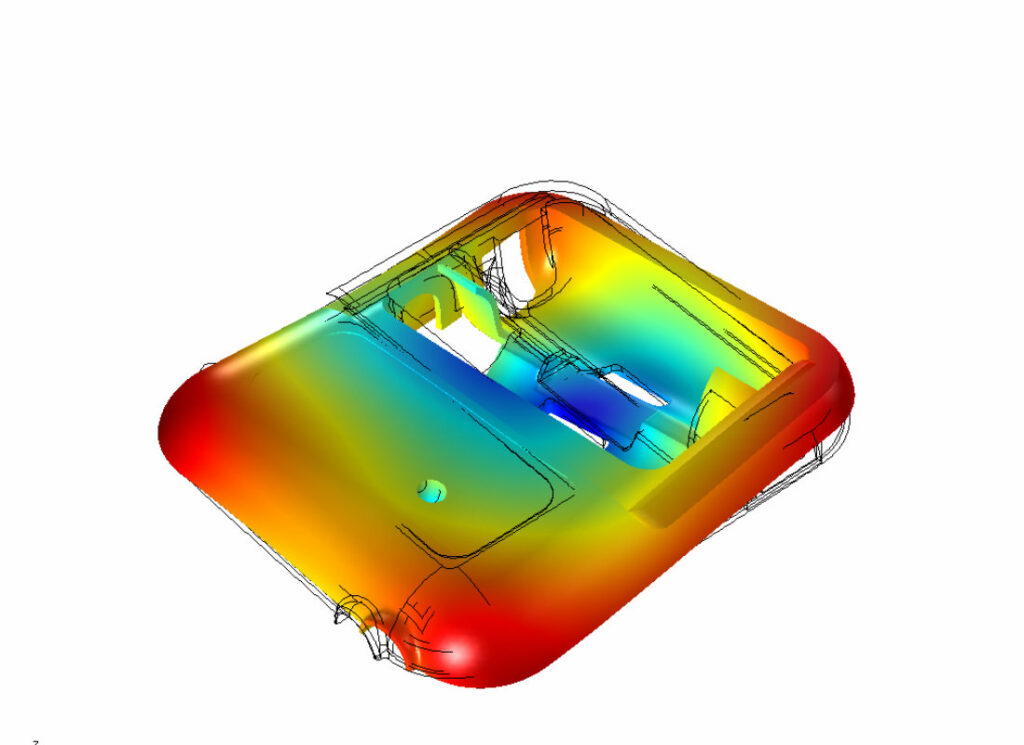
In parallel, Xi built computer models of the pump components to explore how changes in geometry, materials and mounting could reduce noise and vibration. Drawing on firsthand experience in small scale consumer plastic product design, we paid particular attention to how the plastic enclosure and internal fixings amplified or transmitted vibration. Simulation was used to test alternative ribbing patterns, wall thicknesses and isolation features, so that we could target the most effective modifications rather than relying on trial and error.
By comparing test results with simulation predictions, Xi identified the dominant noise and vibration paths and developed a structured development strategy. This strategy set out which design changes would deliver the greatest improvement, how they could be incorporated into the next prototype and what further testing would be needed to verify performance. The design team was then able to translate these recommendations directly into the next generation pump
The Results
Why it matters
Medical devices that accompany patients around the clock must deliver clinical performance without undermining comfort or rest. For negative pressure wound therapy pumps, unwanted noise and vibration can discourage use, interrupt sleep and reduce overall treatment acceptability. At the same time, manufacturers are under pressure to shrink product size and cost while meeting stringent regulatory expectations.
This project shows how Xi’s combination of noise and vibration measurement, plastic product design expertise and computer simulation can help medical device teams refine prototypes quickly and confidently. The same approach can be applied to a wide range of portable medical equipment, from infusion pumps to home monitoring devices, where acoustic comfort and reliability are as important as core function.