
De risking critical equipment on the Queen Elizabeth aircraft carrier
Xi Engineering Consultants used multi channel vibration monitoring and Operational Deflection Shape analysis to understand a severe vibration problem on critical machinery aboard the UK’s newest aircraft carrier, helping Rolls Royce validate isolation and protect vital electronics in service.
The Challenge
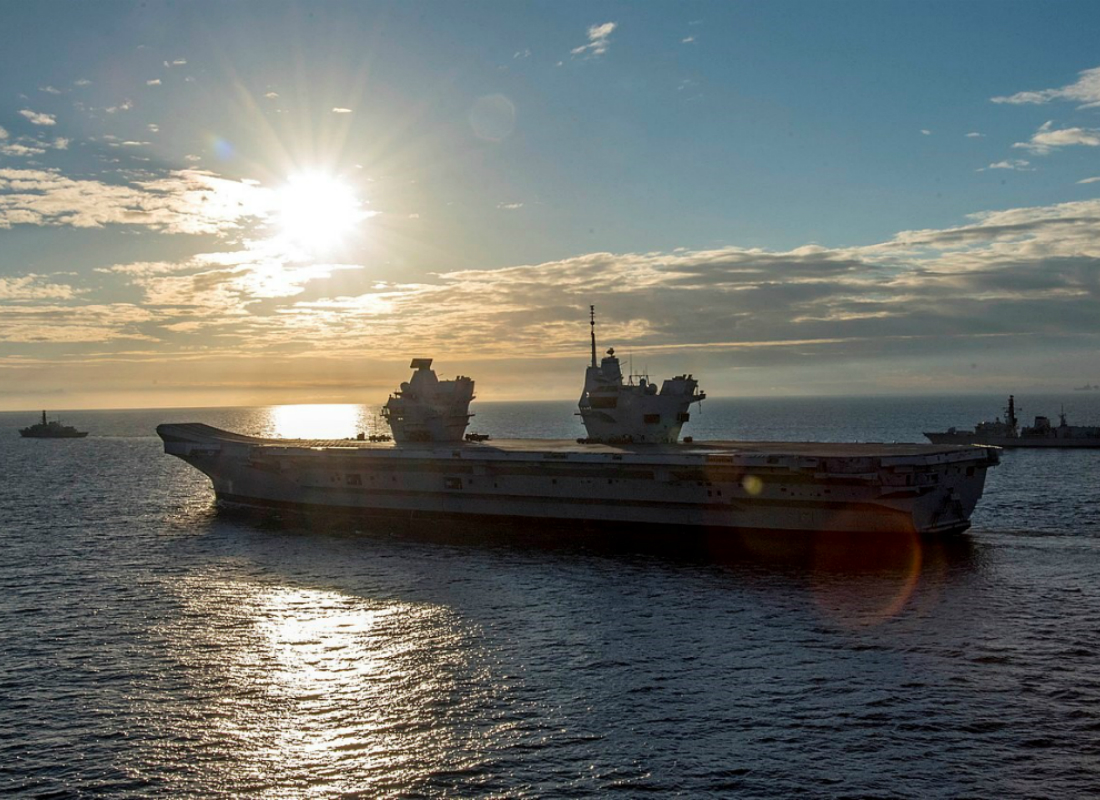
During commissioning of the Queen Elizabeth aircraft carrier, a piece of critical equipment exhibited severe vibration. Excessive motion was visible on the machine’s control panel, raising serious concerns about the reliability of the electronic components mounted within it. Although the component was physically small, it played a vital role in the safe and reliable operation of the vessel. Failure whilst at sea was simply not an option.
An isolation system had been specified but not yet installed, and its effectiveness still needed to be proven. The engineering team required a detailed understanding of the machine’s dynamic behaviour under real operating conditions, together with clear evidence that the proposed isolation would reduce vibration to acceptable levels without compromising performance.
Our Approach
Xi began by instrumenting the machine and control panel with a series of accelerometers at carefully chosen locations. Measurements were taken across different operating states to capture how the equipment behaved at varying speeds, loads and duty conditions. This multi channel dataset provided a rich picture of how vibration travelled through the machine into the control panel and its electronics.
The recorded data was then processed using Operational Deflection Shape (ODS) techniques. Xi built an ODS model that animated the motion of the machine at specific frequencies, revealing how different parts of the structure moved relative to one another. Multi sensor signal processing and multivariate statistical analysis were used to identify dominant modes, critical frequencies and any localised areas of high motion that might threaten component life.
With this clearer view of the system dynamics, Xi evaluated the proposed isolation system and refined the specification where necessary. The ODS model was used to compare behaviour with and without isolation, enabling the team to verify that the solution would significantly reduce vibration at the control panel and sensitive electronics while maintaining the machine’s functional requirements. Throughout, Xi worked closely with Rolls Royce engineers, providing practical recommendations that could be incorporated into the commissioning programme without disrupting the wider schedule.
The Results
Why it matters
Naval and marine vessels rely on complex machinery operating in demanding conditions, where vibration issues can quickly turn from a nuisance into a critical reliability risk. Traditional one dimensional measurements often do not reveal the full picture of how structures move and interact under load.
This project shows how Xi’s combination of multi channel monitoring, Operational Deflection Shape analysis and practical engineering judgement can uncover the true dynamic behaviour of critical equipment and de risk isolation design. The same approach can be applied across marine, defence and industrial assets to extend equipment life, avoid unplanned downtime and protect mission critical operations.