
Protecting hospital microscopes from traffic induced vibration
Xi Engineering Consultants measured and assessed ground borne vibration for a new pathology unit beside a busy road, confirming whether passing traffic could affect sensitive microscopes before the building was constructed.
The Challenge
New Cross Hospital in Wolverhampton was developing a pathology unit designed to house vibration sensitive microscopes. During planning, the team identified a potential risk from a nearby road, where heavy vehicles could generate ground borne vibration that might travel into the new building and disturb high magnification imaging.
The client needed to know whether existing traffic induced vibration would compromise microscope performance and, crucially, whether the proposed building location and structure were suitable without further mitigation. Without clear data there was a risk of either underestimating the problem – and facing costly remedial works later – or over designing and delaying the project unnecessarily. Xi was asked to quantify the current vibration levels and interpret them against recognised criteria for sensitive equipment.
Our Approach
Xi began by visiting the hospital site to measure the actual vibration environment where the pathology unit would be built. Using high sensitivity geophones, our engineers carried out a detailed vibration survey, positioning sensors to capture how traffic on the nearby road excited the ground and how these vibrations might be transmitted into the future structure. Measurements were taken over representative periods so that typical and worst case traffic patterns were included.
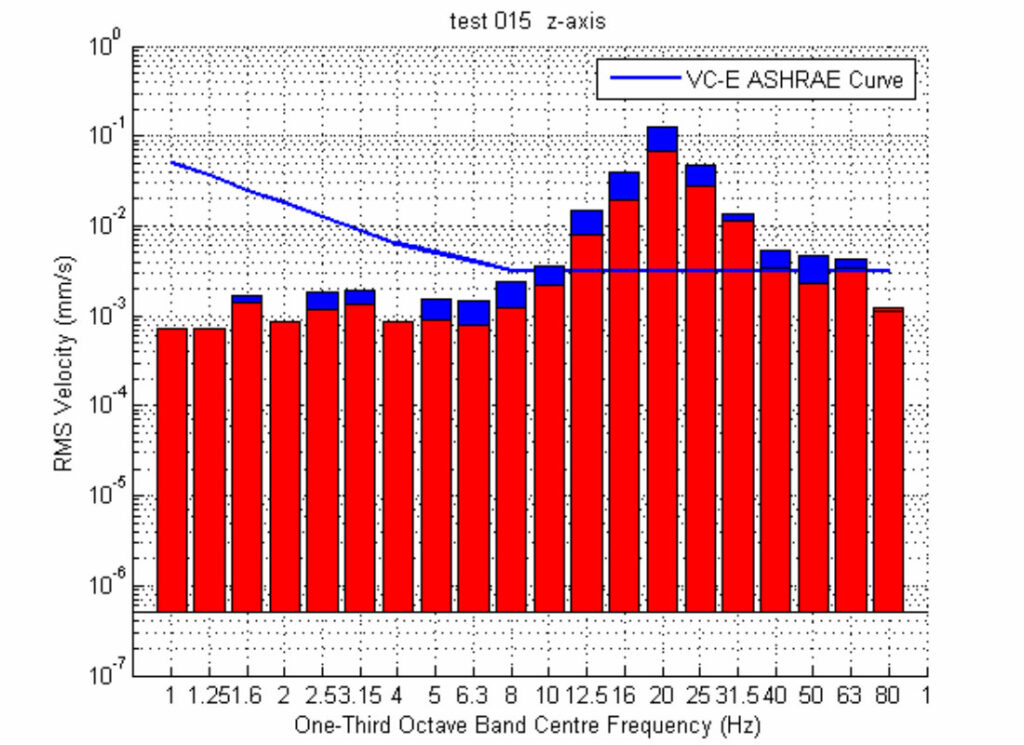
Back in the office, the recorded time histories were processed and analysed in both the time and frequency domains. Xi evaluated the data in line with ASHRAE vibration criteria, which define acceptable vibration levels for different classes of vibration sensitive equipment, including microscopes. By mapping the measured levels onto these criteria, we were able to assess how much margin the microscopes would have under normal operating conditions.
Xi then translated this technical analysis into clear conclusions for the client. We explained the existing structure borne vibration characteristics, highlighted any frequencies of concern and set out what the results meant for the planned microscopes and building layout. Where appropriate, we outlined practical options, such as local isolation or layout adjustments, that could be considered if vibration levels approached the limits for the most sensitive equipment.
Throughout the work, Xi drew on its wider experience with sensitive equipment in healthcare and laboratory settings, ensuring that the advice was grounded not only in standards but in how such facilities are used day to day. This combination of precise measurement, standards based assessment and practical interpretation enabled the design team to move forward with confidence.
The Results
Why it matters
Hospitals and laboratories increasingly rely on highly sensitive imaging and analytical equipment that can be affected by relatively low levels of vibration. At the same time, many new clinical buildings are constructed on constrained urban sites close to roads and other vibration sources. Without targeted measurement and expert assessment it is difficult to know whether a proposed location is suitable for such equipment.
This case shows how Xi’s combination of precise site measurements, familiarity with standards such as ASHRAE and experience with sensitive equipment can turn a potential showstopper into a manageable design consideration. The same approach can be applied to MRI suites, operating theatres, clean rooms and research laboratories where vibration control is critical to patient care and scientific performance.