
Acoustic simulation of a smart home microphone chamber
Xi Engineering Consultants verified the acoustic behaviour of a smart home device microphone chamber, using detailed simulation of resonances and thermoviscous losses to ensure reliable voice activation before tooling.
The Challenge
A consumer electronics client was developing a smart home device that relied on accurate voice activation. The small microphone chamber geometry risked supporting standing waves and acoustic modes that could colour the signal and reduce speech intelligibility. Once tooling was committed, changes to the plastic parts would be expensive and time consuming, potentially delaying launch. The client wanted to be certain that the proposed geometry would not create undesirable resonances or losses, and that the microphone would perform robustly across user conditions, using simulation rather than extended physical trial and error.
Our Approach
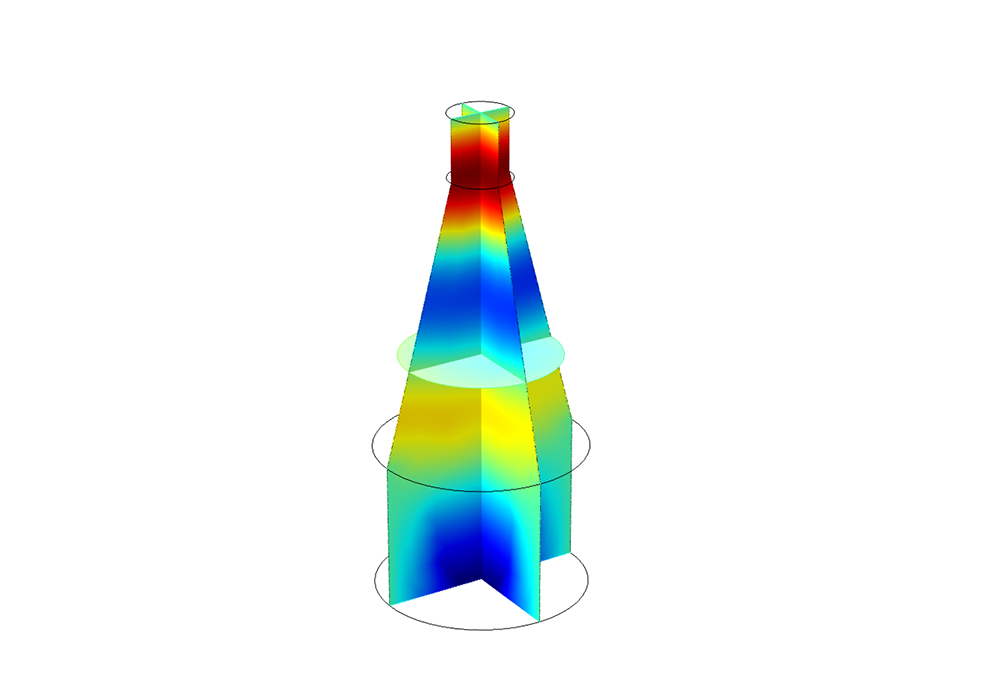
Xi modelled the microphone chamber in detail, capturing the internal geometry and surface properties of the component. Using eigenfrequency analysis, the team identified the acoustic modes and potential standing waves that could be excited during normal operation. Because of the small volume and narrow air gaps, thermoviscous boundary layer effects were also included, allowing Xi to quantify thermo and viscous losses and understand their interaction with resonances. The combined Multiphysics model provided frequency responses and spatial pressure distributions that showed how the chamber would affect sound reaching the microphone, enabling confident assessment of the design without further hardware iterations.
The Results
Why it matters
As smart speakers and voice controlled devices proliferate, users expect them to respond reliably in varied acoustic environments. Small details in internal geometry can make the difference between clear capture and unreliable activation. By bringing advanced acoustics and thermoviscous modelling into the design phase, Xi helps consumer tech teams validate concepts early, avoid costly rework and deliver better user experiences.