
Underwater acoustic modelling to support tidal array EIA
For a 30 MW tidal turbine array off Islay, Xi Engineering Consultants modelled underwater noise and species specific impacts, helping DP Energy secure consent from Marine Scotland.
The Challenge
DP Energy required an Environmental Impact Assessment for a planned tidal turbine array off the west coast of Islay. Marine Scotland needed assurance that underwater noise from the turbines would not cause unacceptable behavioural changes, collision risks or injury to sensitive species. As tidal turbines are relatively new, there were limited operational data sets to draw on, so a credible modelling approach was needed to predict acoustic output and compare it with existing ambient noise and species hearing thresholds. The analysis had to be robust enough to stand up to regulatory scrutiny and integrate clearly into the wider EIA.
Our Approach
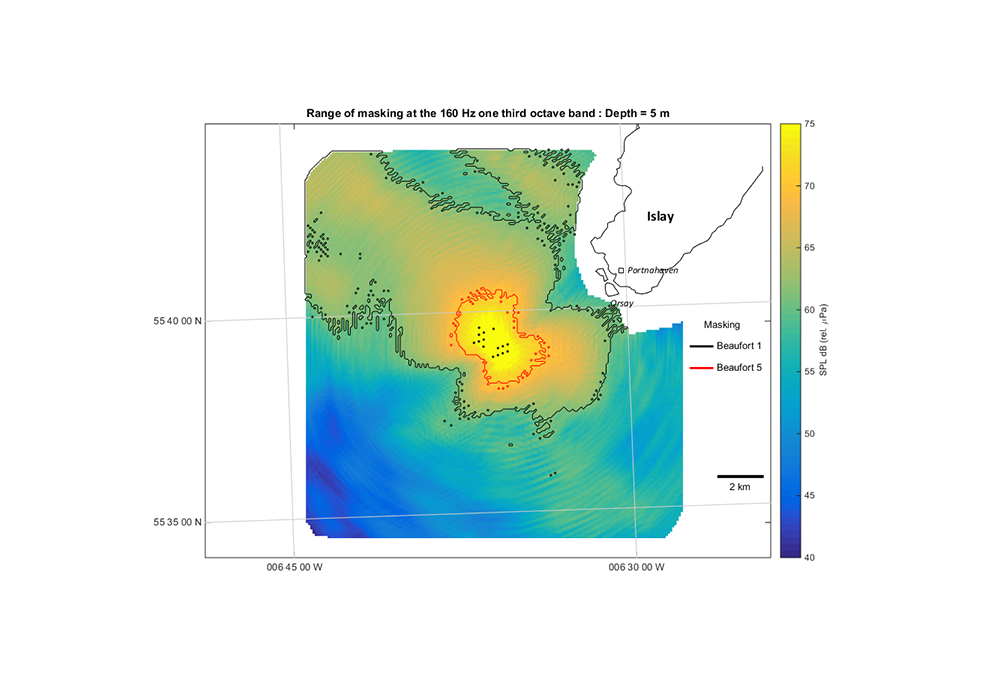
Xi first modelled the dynamics of the tidal turbine drivetrain to characterise vibration excitation across different operating conditions. These excitation forces were then applied within a subsea structural acoustic model of the turbine and surrounding water, predicting sound power and sound pressure levels across relevant frequencies. The predicted operational noise was compared with ambient measurements collected by the Scottish Association for Marine Science, identifying conditions where turbine noise would be distinguishable from background. Using audiograms and published data, Xi assessed detectability and potential impacts for key marine species, providing species specific estimates of behavioural response, collision risk and injury thresholds.
The Results
Why it matters
Offshore renewables must demonstrate that they can coexist with sensitive marine ecosystems. Direct long term monitoring is rarely available at early project stages, so rigorous modelling and evidence based interpretation are essential. Xi’s combination of drivetrain dynamics, structural acoustics and environmental data analysis helps developers turn complex underwater noise questions into clear EIA evidence, supporting responsible growth of marine energy.