
Predicting underwater noise for a 30 MW tidal turbine array
Xi supported DP Energy with subsea acoustic modelling and drivetrain analysis for a proposed tidal turbine array off Islay, providing species specific assessments of detectability and risk to satisfy Marine Scotland’s Environmental Impact Assessment requirements.
The Challenge
DP Energy needed consent for a 30 MW tidal turbine array off the west coast of Islay. As tidal turbines are a relatively new technology, regulators required a robust assessment of underwater noise impacts on marine life, including potential behavioural change, collision risk and injury. Direct long term measurement of operational devices was not possible at this stage. DP Energy therefore needed a credible modelling approach that could predict sound output, compare it with existing ambient noise data and evaluate species specific exposure against hearing and impact thresholds.
Our Approach
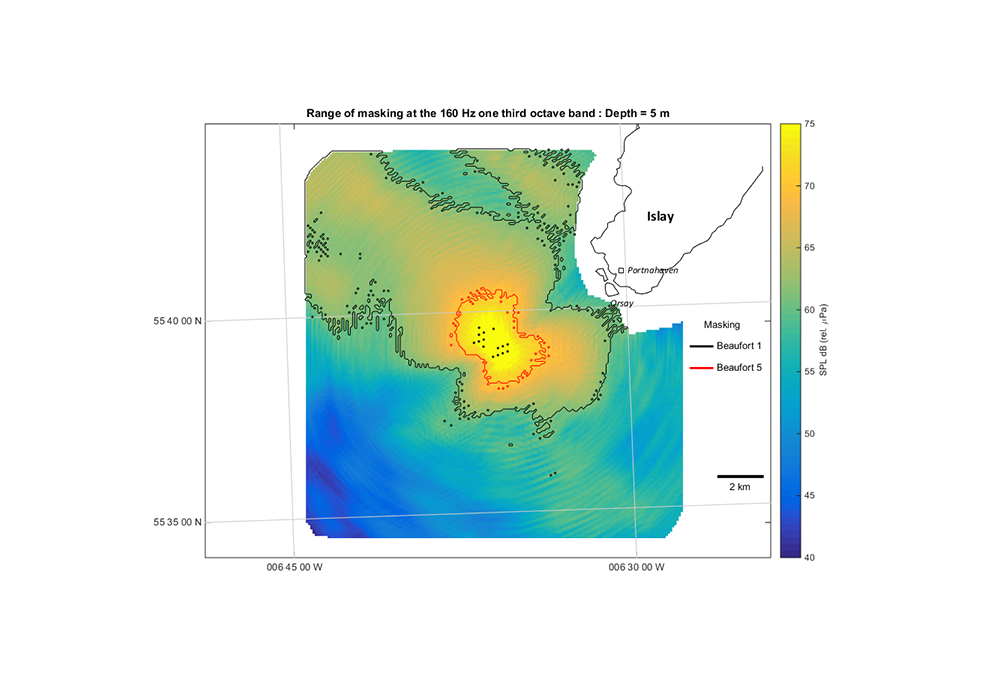
Xi first modelled the vibration signature of the tidal turbine drive train to estimate excitation forces during different operating conditions. These forces were then used as inputs to a subsea structural acoustic model of the turbine and surrounding water, predicting sound power and pressure levels at source. The predicted operational noise was compared against measured ambient noise data from the Scottish Association for Marine Science, allowing Xi to identify when turbine noise would be distinguishable from background conditions. Using audiograms and published data for relevant marine species, the team assessed detectability, potential behavioural response, collision risk and injury thresholds. The analysis was integrated into the wider EIA and presented in a format suitable for review by Marine Scotland.
The Results
This is a very significant development for DP Energy and is a further expression of our confidence in tidal energy generation as a key component in the portfolio of reliable, predictable and emissions-free power sources needed to take us into a more self-sustainable future.”
Why it matters
Offshore and marine renewables projects must demonstrate that they can operate without unacceptable impact on sensitive species. This case illustrates how Xi’s structural acoustic modelling and environmental data analysis can turn complex underwater noise questions into clear evidence for regulators. The same capabilities can be applied to offshore wind, wave energy, subsea infrastructure and port developments.