
Using hydrogen to push the boundaries of sustainable energy supply
We need energy to power almost everything we value as a society. For over a century that has meant digging up fossil fuels and burning them, with consequences for the climate that are now impossible to ignore.
Renewable electricity from wind, solar and marine sources is changing that, but we still need better ways to store and move clean energy when and where it is needed. Hydrogen is one of the most promising options. At Xi Engineering Consultants, we help developers, investors and asset owners understand where hydrogen fits in their systems, and how to design the engineering around it.
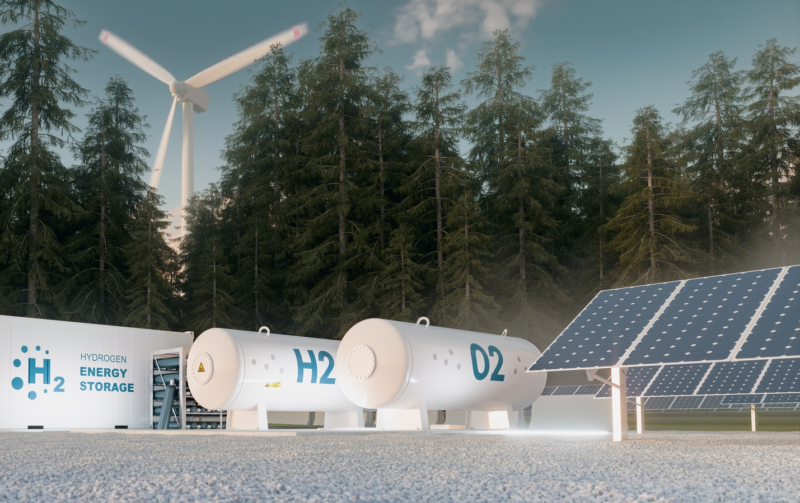
Why we need new ways to store and move clean energy
For decades, our energy system has been shaped around fossil fuels:
- Coal, oil and gas are dug up or drilled
- The stored chemical energy is released through combustion
- We convert that energy into motion, heat or electricity
The problem is that burning hydrocarbons releases large amounts of carbon dioxide and other greenhouse gases, accelerating climate change.
Renewables flip this picture. Wind, solar and other sources:
- Use natural flows rather than stored fossil energy
- Have no fuel costs once built
- Are now among the cheapest forms of new electricity in many regions
But they are variable. The wind does not always blow where demand is, and grid infrastructure was not designed around large volumes of remote, weather dependent generation. That is where hydrogen becomes valuable – not as a primary source of energy, but as a flexible energy carrier that can store and transport renewable energy over time and distance.
Hydrogen in the energy mix
Hydrogen is the most abundant element in the universe. On Earth it rarely appears on its own – it is usually bound up in compounds such as water or hydrocarbons, so we have to produce it before we can use it.
Hydrogen is attractive because:
- It can be produced from water using electricity, potentially from renewables
- It can be stored, transported and used in a range of sectors
- When used in a fuel cell, its only direct by product is water
In practice, hydrogen is most likely to play a major role in:
- Hard to electrify sectors such as heavy industry, shipping and some heavy transport
- Long duration energy storage, where batteries become less economic
- Making use of remote renewables, such as offshore wind far from demand centres
However, its climate impact depends entirely on how it is produced.
Grey, blue and green hydrogen explained
The industry often talks about “colours” of hydrogen. They are shorthand for the production method and associated emissions.
- Grey hydrogen
Produced mainly from natural gas using processes such as steam methane reforming. The carbon dioxide released is emitted to the atmosphere, so overall emissions are high. - Blue hydrogen
Starts from the same fossil processes as grey, but captures and stores a large share of the carbon dioxide using carbon capture and storage. Emissions are lower, but not zero. - Green hydrogen
Produced by splitting water in an electrolyser using electricity from renewable sources. When both production and use are powered by renewables, associated emissions can be very low.
Global analyses suggest that green hydrogen is expected to become the dominant low carbon production route by mid century, as the costs of renewable electricity and electrolysers continue to fall.
For hydrogen to genuinely support a sustainable energy system, it is green hydrogen that needs to grow – not simply more grey.
From electrolysis to fuel cells closing the loop
Many people first encountered hydrogen at school by splitting water into hydrogen and oxygen using a battery and two electrodes. That basic process is electrolysis.
In a modern green hydrogen system:
- Electricity from wind, solar or other renewables powers an electrolyser.
- The electrolyser splits water into hydrogen and oxygen.
- Hydrogen is collected, stored and transported.
- Later, the hydrogen is used either in a fuel cell to generate electricity or is burned in a suitable engine or turbine.
A fuel cell is effectively the reverse of electrolysis – it combines hydrogen and oxygen back into water, producing electricity and heat in the process.
Right now, the economics are evolving quickly. Studies in Europe, for example, show that hydrogen produced from fossil fuels with no capture can still be significantly cheaper per kilogram than green hydrogen, although the gap is narrowing as technology matures and scales.
This is why engineering design, smart integration with renewables, and careful project selection are critical.
Challenges with hydrogen today
Despite its potential, hydrogen is not a simple drop in replacement for existing fuels.
Key challenges include:
- Adapting existing gas infrastructure
Burning pure hydrogen in grids and appliances designed for natural gas raises questions around materials, flame behaviour and nitrogen oxide emissions. - Cost and efficiency of fuel cells and electrolysers
While costs have fallen, high performance systems remain capital intensive, and real world efficiency depends on operating regimes and integration. - Production mix
Most of the world’s hydrogen is still grey, produced for industrial use with significant associated emissions.
From an engineering perspective, the task is to design systems that make best use of green hydrogen where it adds most value, rather than treating it as a one size fits all solution.
Offshore wind and hydrogen making remote resources useful
One of the most compelling use cases for green hydrogen is in combination with offshore wind.
Offshore wind farms, especially floating projects far from shore, often face:
- Long, expensive export cables to connect to the onshore grid
- Grid capacity constraints and curtailment risks
- Long development times for network infrastructure
An alternative is to produce hydrogen offshore:
- Electricity from offshore turbines powers electrolysers on platforms, floating units or nearby vessels.
- Hydrogen is produced on site and then transported using existing carrier ships or dedicated pipelines.
- Onshore, hydrogen can be stored in adapted gas storage sites and used when required.
This approach:
- Turns variable offshore wind into a storable, tradable commodity
- Reuses elements of existing oil and gas infrastructure where appropriate
- Reduces reliance on very long high voltage cables for every project
It is not the right solution everywhere, but in the right conditions it can unlock significant additional renewable potential.
Reusing existing infrastructure where it makes sense
Oil and gas infrastructure – platforms, pipelines, storage facilities and carriers – represents a huge existing investment. In some cases, it can be repurposed for hydrogen, for example:
- Using modified gas pipelines for hydrogen blends or pure hydrogen transport
- Adapting gas storage sites for hydrogen storage
- Using existing carrier ships to move hydrogen or hydrogen based fuels
Studies suggest that these options can be attractive, but only on a case by case basis, with careful analysis of safety, materials, cost and long term performance.
This is where detailed engineering assessment matters much more than high level concept sketches.
How Xi supports hydrogen and renewable energy projects
Xi Engineering Consultants works across wind, renewables and emerging hydrogen systems, helping clients turn opportunity into robust, evidence based projects.
We support developers, asset owners and investors to:
- Evaluate concepts and options
Use multiphysics simulation and techno economic analysis to compare different hydrogen production and transport strategies, including offshore concepts and integration with wind. - Model infrastructure and system behaviour
Assess how pipelines, storage, electrolysers, fuel cells and turbines perform under real world operating conditions, including fatigue, vibration and thermal effects. - Build and validate digital twins
Create digital twins that connect models with live or periodic data, so teams can optimise operation, plan maintenance and explore what if scenarios over an asset’s life. - Understand noise, environmental and community impact
Analyse acoustic and environmental effects of new plant and infrastructure, and provide clear documentation for planners, regulators and community stakeholders. - De risk investment decisions
Turn complex engineering and market uncertainty into clear, traceable evidence that boards, partners and funders can use.
You can engage Xi for a focused feasibility study, support on a specific hydrogen or renewables project, or as a long term partner across a portfolio of assets.